Showing posts with label animal love. Show all posts

Wednesday, October 9, 2019

The Best Snacks for pets

Every pet loves a snack, but are they always getting the healthiest snacks? 
If we give our fur babies a bite of this and bite of that, we aren't thinking about if the treat is healthy. 
This article by, ASPCA is a list of snacks that are healthy and better for our pets. 
Take a look. 


APCC: Snacks
ASPCA


According to the Association for Pet Obesity Prevention, 54% of dogs and 58% of cats in the United States are overweight or obese. For many pets, a combination of increased activity and decreased calories in their daily diet can help shed those excess pounds.

An Apple a Day…

Some commercially produced pet treats are deceptively high in calories, and a couple of treats can actually decrease or stop weight loss. Try substituting safe fruits and vegetables into your pet’s diet.
Green beans are very low in calories and have a satisfying crunch. They can be a great green snack for your dog or cat. In addition, most dogs love baby carrots, and at about four calories each they make a great weight loss snack. Also, carrots are gentle on the tummy and don’t usually make dogs gassy—a common complaint with other veggies. If you’re a cat person, you can also try peas, frozen corn, broccoli florets, and of course, cat nip! Cat nip and cat grass can actually be beneficial for your cat’s health and are kind of like wheat or oats.
Raspberries and apples (without the core and seeds) are low in calories, and are a good source of fiber, which will help your dog feel full and satisfied.
It’s important to note that not all fruits and vegetables are safe for animals. Be sure to avoid garlic, onions, raisins and grapes, as they can be toxic to your pet. 


Saturday, April 13, 2019

5 Signs Your Dog is Stressed (and How to Relieve it)


April is National Stress Awareness Month. Stress is more common in dogs than you may think! Is your dog acting unusual? Perhaps he or she seems overly anxious or depressed. Even worse, stress can negatively impact your dog's health. Here are five common signs of stress and anxiety in dogs to help you identify it and seek help quickly.


1. Diarrhea, Constipation, or other Digestive Issue
Although they are more commonly attributed to disease or food intolerance, gastrointestinal issues such as diarrhea and constipation can also be brought on by anxiety. Speak to your veterinarian if the diarrhea, constipation, or other digestive issue is abnormally severe, especially if it has lasted longer than 24 hours or if the diarrhea is bloody. Blood in the vomit and/or stool can be an indicator of a food borne illness.


2. Decrease in Appetite

Dogs don't go on fasts or diets like we do, so it's important to consult a veterinarian if your pet suddenly loses interest in food or stops eating altogether. It could be due to stress or to an underlying health condition, including anorexia, which can cause your dog to refuse to eat totally and its food intake to decrease so much that it leads to drastic weight loss. 

3. Isolation

Some dogs like some alone time now and then. However, a dog that is constantly isolating him or herself from other pets or people may be suffering from anxiety or a sickness. Your veterinarian can help you identify the cause of this strange behavior. 

4. Increased Sleeping

By now you will have become accustomed to your dog's sleeping schedule. Speak with your veterinarian if your dog is sleeping more than usual or seems overly lethargic. Lethargy is often the first symptom that a dog is sick, injured or traumatized. It can also be a symptom of conditions including diabetes, heart and liver problems, tumors, diarrhea and severe dehydration, hypothyroidism, anaemia and poisoning, among others.

5. Aggression Toward People or Other Animals

Aggressive actions toward animals or people can be a sign of a stressed or sick dog. Consult your veterinarian or a veterinary behaviorist before the problem gets worse. Many aggressive signs are accompanied by a fearful body posture and facial expression, and with submissive behavior. Treatment for aggresion focuses behavior management techniques to assist the dog with its anxiety and anger. Devices such as muzzles can also be effective when the dog is away from home, with all treatment being focused on preventing injury to humans, other animals, and to the dog.


How to Help a Stressed Out Dog?


If your dog’s behavior changes suddenly in any way, schedule an appointment with your veterinarian. He or she can rule out any underlying medical issues as well as make recommendations to help lower your dog's stress level. Here are some tips for helping to alleviate anxiety in your dog:

Play/exercise with your dog regularly – Physical activities like a game of fetch or a walk around the block are a great stress reducer for dogs.

Create a safe zone – Set apart an area in your home for your dog to escape high-stress events like thunderstorms and parties. Provide your dog with a favorite "security blanket" such as a toy and visit your dog often. If possible, stay with him until the high-stress event has passed. Your presence is a great reassurance to him or her.

Choose a high quality dog food – Your dog's diet is an integral part of his health and wellbeing. Providing your dog with a diet that is not properly balanced for his or her life stage and lifestyle may cause unforeseen repercussions that may lead to anxiety and stress.

Source: PetMD 

Thursday, April 11, 2019

The 10 Incredible Ways Your Cat Shows You Love

The 10 Incredible Ways Your Cat Shows You Love


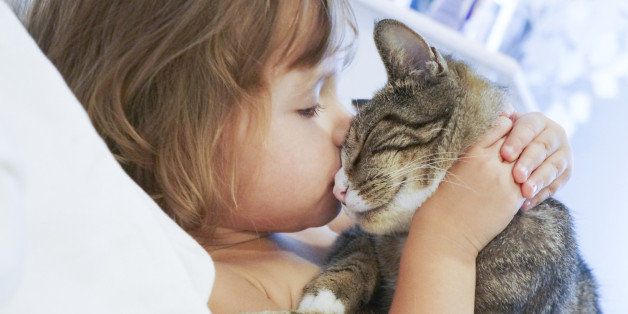
Child is kissing a cat

Even though my cat can’t speak aloud, she is constantly trying to find ways to communicate with me. Whether my cat is “meowing” because she’s hungry, or pawing at my legs because she wants attention, she finds ways to let me know exactly what she is thinking. While I can’t read her mind, I know that she is also constantly finding new ways to tell me she loves me. And just as there are specific behaviors through which a dog communicates love, there are specific, unique ways that our cats are saying “I love you.” This exclusive list of behaviors delves into the incredible ways that our cats attempt to communicate their love for us. And while I knew a few of these already, most of them were quite surprising. In fact, I was shocked by just how often my cat has been trying to show me how much she loves me!

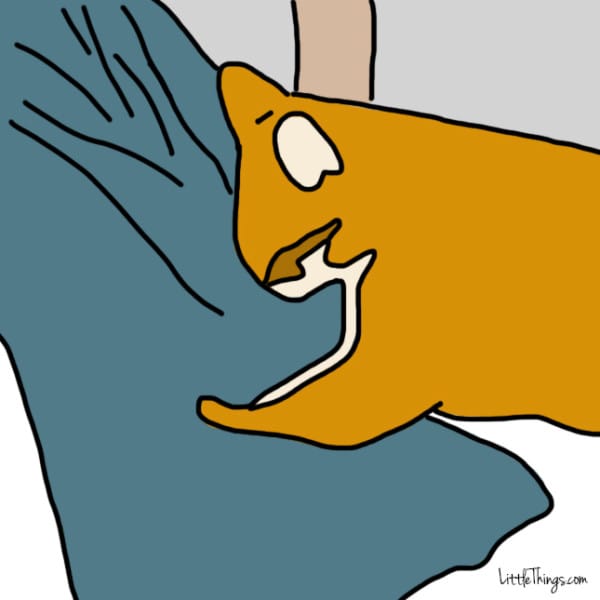
1. Kneading Your Legs
2015-12-03-1449157858-59423-Cat1.jpg

Kneading is when your cat uses their paws to push in and out against a soft surface, such 
as your lap. This is one of the main ways your cat tries to say “I love you.” According to 
PetMD“If your cat is curled up and kneading your lap while you’re petting him, he’s 
returning the affection and telling you he loves you right back. Unfortunately, this can 
be quite painful, since the happier he is, the harder he’ll dig in with his sharp nails.” They recommend that you ease the painful part of this kneading by “placing a thick, soft barrier between the cat and 
your lap.”

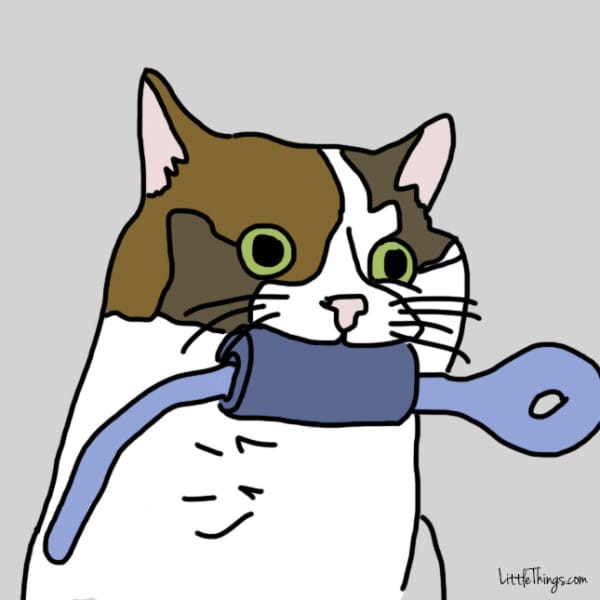
2. Bringing You a Present
2015-12-03-1449157882-1402211-Cat2.jpg

You may be familiar with your cat bringing you presents, such as toys or small, dead animals. 
This is your cat’s way of showing love. Certified Animal Behavior Consultant Amy Shojai
writes, “Cats love with gifting. Mighty hunter cats that catch everything from toys to bugs, 
mice or frogs, often share the bounty with those they love. Kitties who present you with this bounty deserve praise.” While it might seem odd, Shojai says, “They wouldn’t bring these 
special gifts if they didn’t love you.”

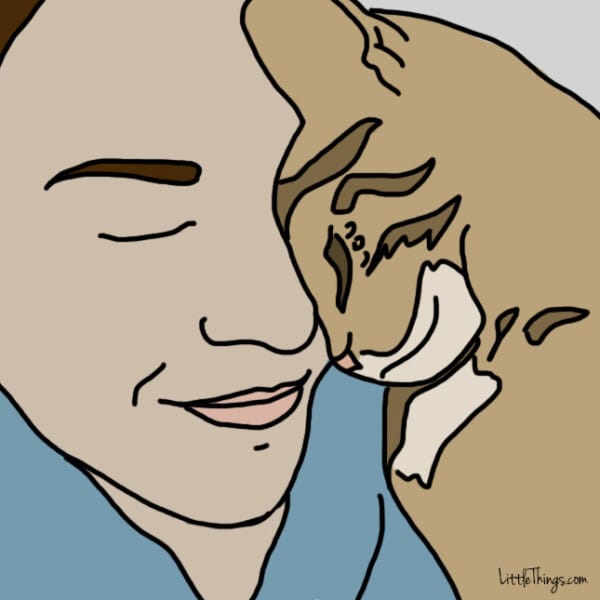
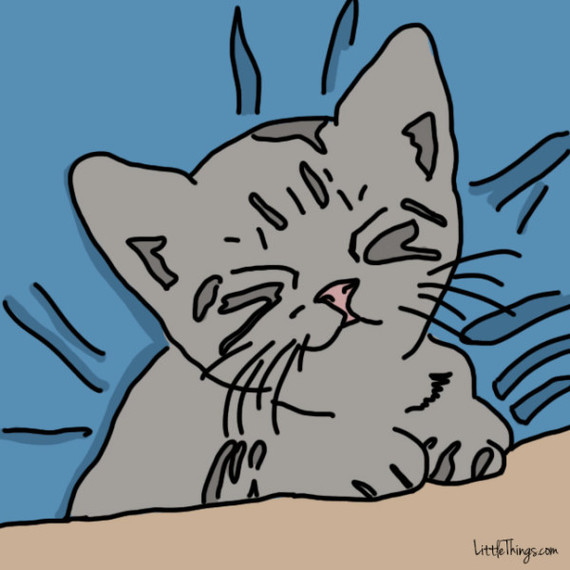
3. Head-Butting You

2015-12-03-1449157907-2257293-Cat3.jpg


Head-butting may seem like an odd behavior, but it actually shows that your cat truly cares
about you. According to Mother Nature Network, “Cats have secret glands concentrated on certain parts of their bodies, including their cheeks and heads. When your kitty rubs her
head or face against you, she’s marking you with her scent and claiming you as part of her
family group.”
They continue, “This scent is a source of both comfort and familiarity for your kitty.”

4. Staring Into Your Eyes

2015-12-03-1449157928-1369697-Cat4.jpg


Staring at you and slowly blinking is a way in which your cat shows you great affection.
Dr. Karen Becker writes, “This might be the display of cat love that is easiest for humans to understand. If your kitty first stares at you, then blinks, then opens his eyes wide, then slowly blinks a second time, he’s telling you he loves and trusts you.”
She says this is an extreme sign of affection. “It’s the equivalent of being kissed.”

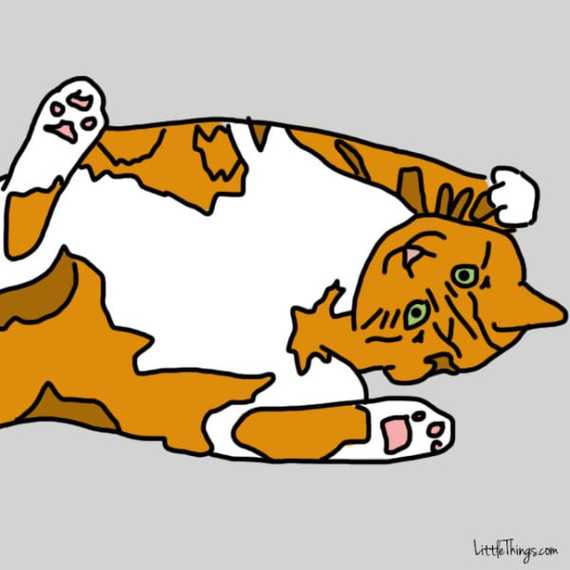
5. Showing You Their Belly
2015-12-03-1449157962-6630568-Cat5.jpg

The flashing of the stomach is one way that your cat is saying “I love you.”
According to IHeartCats.com, “Like most animals, cats do not show their stomachs to
just anyone. If your cat rolls over on its back to give you a flash of that fuzzy belly, this is
an indication that they feel comfortable around you.”
They continue, “Not only this, but they feel loved and protected by you, rendering
themselves defenseless while on their backs.”

6. Curving the Tip of Their Tail
2015-12-03-1449157978-2505760-Cat6.jpg

The tail can actually be an incredible barometer into how your cat feels about you.
In an essay entitled, Ask a Behaviorist: How Do Cats Show Affection to People?, Catster
writes, “Kitties express happiness and warm feelings by fluffing out the base of their tails
while subtly quivering them. Simultaneously, they hold their tails upright with a slight
curve at the top.”
They continue that this tail curve “is sometimes called the happy tail dance.”

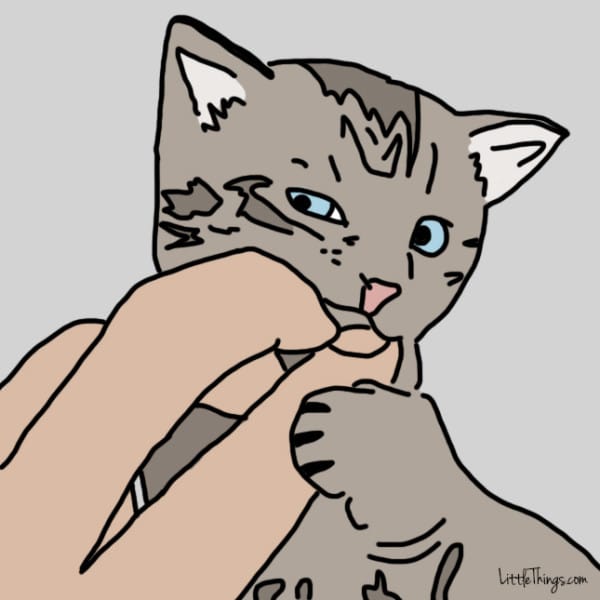
7. Nipping You
2015-12-03-1449157995-2071236-Cat7.jpg


Don’t get mad, because gently nipping at your finger is another way your cat is saying
that they love you.
According to Dr. Karen Becker, “This show of love from your kitty can prove to be a
bit painful... [but] your cat really doesn’t understand her love bite isn’t always
pleasant for you.”
These love bites can also be seen as your cat interacts with other cats. “Kitties nip
each other affectionately, and their skin is tougher than ours.”

8. Rubbing Against Your Legs
2015-12-03-1449158011-3305896-Cat8.jpg

When your cat just can’t seem to get enough of your legs, that is likely a sign of true love.
Dr. Karen Becker writes, “Rubbing against another creature is how cats show affection.
If your kitty rubs up against your leg... he’s putting his scent on you as a way of
claiming you as his own.” This is quite similar to the head-butting behavior.
“It’s important to your relationship and bond with your cat to allow him to rub
against you.”

9. Purring
2015-12-03-1449158039-7294777-Cat9.jpg


You’ve heard your cat purr before, but you may not have realized that this was a love purr.
According to certified expert Amy Shojai, “Cats love with purrs. Her purrs can mean
a variety of things, from delight to expressions of concern. And kitty purrs range from
soft and subtle to Mack-truck loud.”
In case you had any doubt, she writes, “When your cat purrs in your presence, you
can be sure she’s expressing her love for you.”

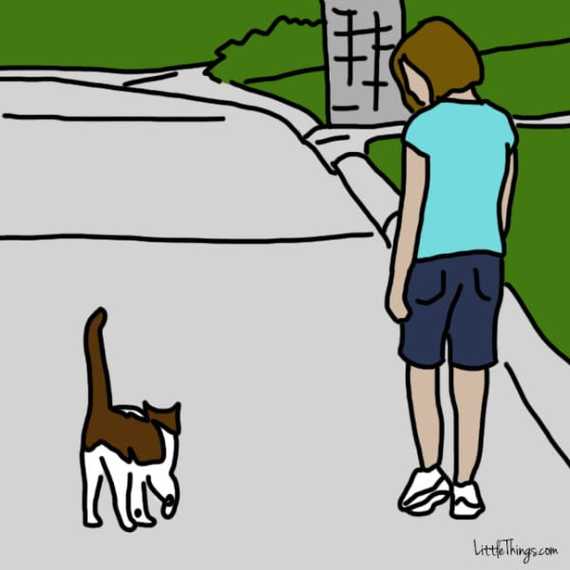
10. Following You Around
2015-12-03-1449158055-8981473-Cat10.jpg

If your cat can’t seem to get enough of your company, you know you have a loving connection.
According to the Mother Nature Network, “If your feline friend follows you from room
to room, jumps onto tables and counters to be near you, and always seems to be
right where you step, she clearly enjoys your company.”
A good test is if your cat continues to follow you, “especially if it’s not near feeding time.”
Paying attention to these common cat behaviors is the best way to be sure
that your pet truly does love you.
Source: Phil Mutz, writer at LittleThings.com

Hot for the summer

To avoid these problems and enjoy the  summer season  with your  pet , here're the tips to keep in mind. Provide plenty of water and...