Showing posts with label deer facts. Show all posts

Thursday, November 29, 2018

What happens to deer in the winter?

What do deer do in the cold?
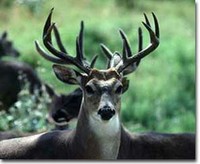

Texas deer move more to warmer temperatures when the seasons start to change.                                              Deer move less during frigid temperatures so they can conserve much needed calories. Doing this can be the difference between survival and starvation. Nutritious food is scarce during the winter and the deer's metabolism actually slows down significantly to help retain energy needed to keep the body warm. 
They usually move around a bit in the winter, but when it is windy they bare down.        The wind decreases they natural ability to to hear and smell.  
Deer tend to "hunker down" and remain until the winter ends.                                    Avoiding deep snows and high winds, they will preserve their energy and bed near the sun. 

Friday, August 31, 2018

September is coming


There are an estimated four million white-tailed deer living in Texas. They are often solitary animals but can be found in herds ranging in various sizes. White-tails eat mostly forbs (weedy plants) and shrubs, and can be found in wooded and brushy areas of the state. Deer do not migrate, but remain in an area around one square kilometer in size (about 7 square city blocks) year round.
White-tailed deer can be seen in many urban areas where deer overpopulation is a problem. Many homeowners feed the deer because they enjoy watching these browsers from their windows. The problem with feeding deer is that they can become a nuisance. Once they get comfortable eating the corn provided for them, they have less fear of humans and will eat landscape plants and garden vegetables. Deer love to eat the tender new growth of plants,often eating roses, and other favorite landscape plants. Feeding deer also leads to more fawns being born, and while that may sound desirable, it can lead to an overpopulation which usually means starvation for many animals. This is an issue many urban areas are dealing with today.
Read More at the Texas Parks & Wildlife 

Wednesday, August 22, 2018

Whitetail Deer/ Cervidae Services

Whitetail Deer/
Cervidae Services

We understand the devastation of "everything went wrong, or I didn't think it could happen to me".  At Thompson Veterinary Services, we are passionate about getting you current and up-to-date education and medical services ensuring a healthy herd.
Please call and establish a rare, dedicated, and unique veterinary relationship today and ask about our new Whitetail Deer programs and services. The ONLY thing you have to lose.... is your herd!


Cervidae, commonly referred to as "the deer family", consists of 23 genera containing 47 species, and includes three subfamilies: Capriolinae (brocket deer, caribou, deer, moose, and relatives), Cervinae elk, muntjacs, and tufted deer), and Hydropotinae, which contains only one extant species, Chinese water deer
However, classification of cervids has been controversial and a single well-supported phylogenetic and taxonomic history has yet to be established.


Monday, March 26, 2018

Doe vs Buck

Doe vs Buck

How can you tell the difference between a doe and a buck?  The most obvious, at first sight, the antlers are a dead giveaway.  Bucks have antlers and does, do not.  Beyond this huge difference, you can tell a doe from a buck by their tracks!  Does have a pointed track where a buck has a more wide track and the buck also tends to drag their feet.  

 Doe

Buck

Hot for the summer

To avoid these problems and enjoy the  summer season  with your  pet , here're the tips to keep in mind. Provide plenty of water and...