What To Do If Your Pet
Eats Something Toxic
 In the wild dogs are scavengers, meaning they’ll eat
whatever they can find.Some pet dogs are the same
and will eat anything they find lying around.
There are lots of foods, items and substances in the
house and environment that can poison dogs or block
their guts.
house and environment that can poison dogs or block
their guts.
Treatment and outcome varies a lot depending on
what it is your dog has chosen to eat.
what it is your dog has chosen to eat.
Contact your vet immediately if your dog has eaten
something harmful. Acting fast could
save your dog's life!
something harmful. Acting fast could
save your dog's life!
Toxins, poisons and harmful items for dogs
There are many substances that are toxic, poisonous or harmful to dogs in the house,
garden and environment, such as cleaning products, human medicines, poisonous plants,
antifreeze and foods (e.g. chocolate, grapes and onions).
garden and environment, such as cleaning products, human medicines, poisonous plants,
antifreeze and foods (e.g. chocolate, grapes and onions).
Dogs also love to eat strange items which can cause gut blockages. Bones, rubber toys,
stones, socks, underwear and baby’s dummies are just a few examples. The list is endless!
stones, socks, underwear and baby’s dummies are just a few examples. The list is endless!
Gut blockages are very serious and can kill a dog if not treated quickly.
Contact your vet immediately if you think your dog has eaten something harmful.
Symptoms
- Vomiting
- Diarrhea
- Twitching
- Sleeping more or being quieter than usual
- Not wanting to eat
- Standing with a hunched back or adopting a ‘bowing’ or ‘prayer’ position due to tummy pain
- Straining and not being able to poo (constipation).
Some dogs will vomit but the vast majority won’t show any signs immediately after eating something
they shouldn’t have. It usually takes a day or two for symptoms to develop (depending on what they’ve
eaten).
they shouldn’t have. It usually takes a day or two for symptoms to develop (depending on what they’ve
eaten).
If you think that your dog may have eaten something harmful contact your vet immediately for
an emergency appointment.
an emergency appointment.
When to contact your vet
Contact your vet immediately for an emergency appointment if your dog has eaten something
they shouldn’t have. Never wait to see if a problem develops - your dog could become very ill or
even die without treatment. Acting fast could save your dog's life.
they shouldn’t have. Never wait to see if a problem develops - your dog could become very ill or
even die without treatment. Acting fast could save your dog's life.
You know your dog best. Even if you’re unsure whether or not they have eaten something that
may harm them, if they’re not themselves or you are concerned it’s always best to contact your vet.
may harm them, if they’re not themselves or you are concerned it’s always best to contact your vet.
Treatment options
Treatment depends entirely on what your dog has eaten, and may include:
- Making your dog vomit (when instructed by vet)
- Activated charcoal in a meal (a liquid that helps absorb any remaining toxins, excess gas & fluids)
- Keeping them overnight on a drip to give them fluids
- Blood tests
- A medication to help reverse or prevent the effects of the toxin your dog has eaten
- X-rays
- An ultrasound scan of their tummy
- An emergency operation to remove a blockage.
Outlook
Toxins and poisons
- The outcome depends entirely on what your pet ingested and whether they get proper treatment.
- Most dogs that receive veterinary treatment quickly make a good recovery.
- Unfortunately some animals, even with correct treatment, develop health problems.
- Health problems vary depending on what your dog has eaten.
Gut blockages
- Having a gut blockage is a very serious condition that can be fatal if left without treatment.
- Often your dog will need an emergency operation to remove the item.
- Unfortunately, even with correct treatment, it's common for animals to develop complications.
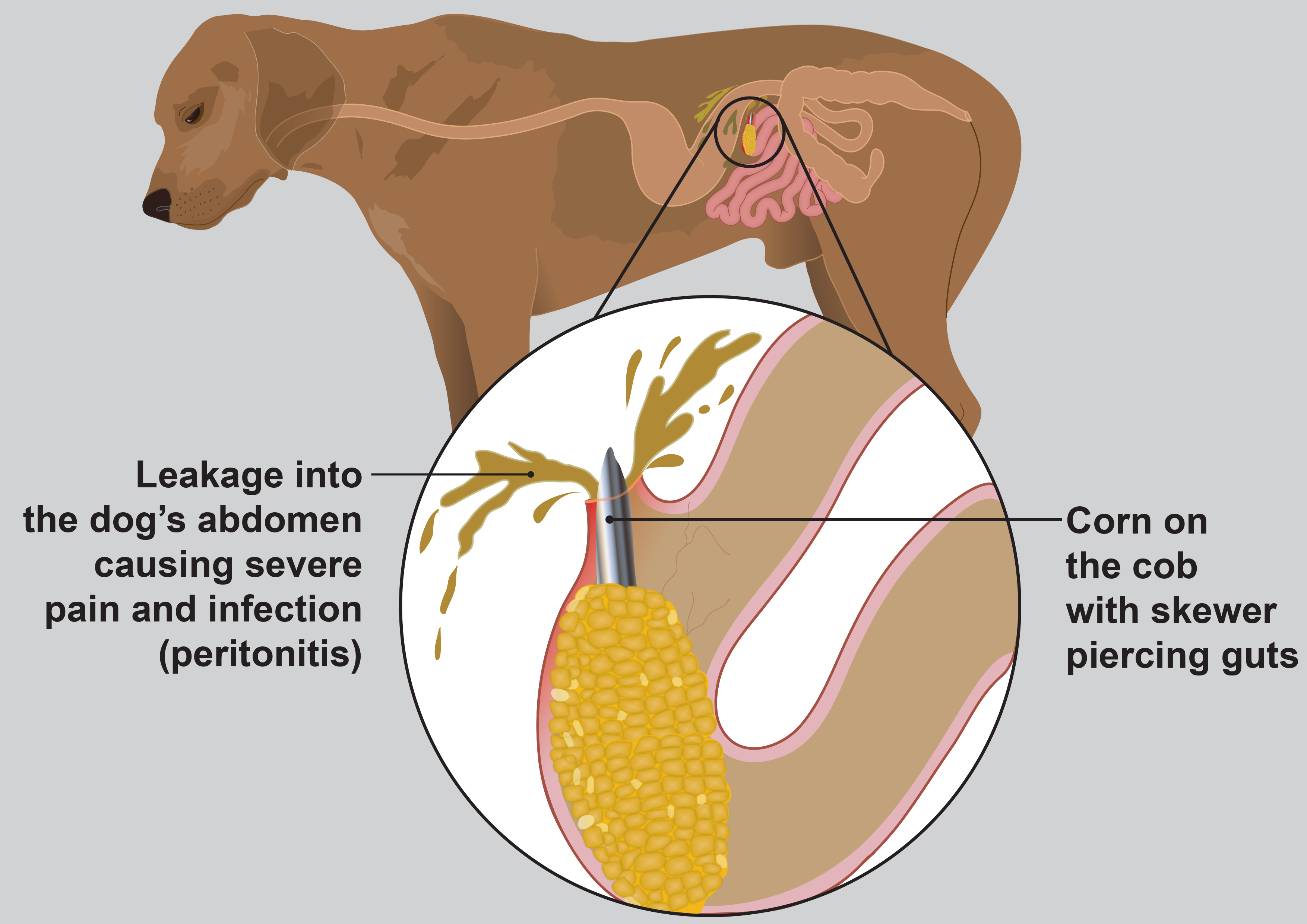
Gut blockages can lead to serious complications
Why do dogs eat things they shouldn't?
Curiosity
Dogs explore the world with their mouths. Sometimes they can accidentally swallow the things they
pick up out of curiosity.
pick up out of curiosity.
Boredom
Dogs are very intelligent animals and they can get bored easily. They might fill their time by chewing
on or tearing up things in your house, swallowing something they shouldn’t in the process.
on or tearing up things in your house, swallowing something they shouldn’t in the process.
Lack of nutrients
Some dogs have a taste for things that we don’t think of as food, such as poo. This can be a sign that
they’re missing out on important nutrients. Speak to your vet for advice.
they’re missing out on important nutrients. Speak to your vet for advice.
Stress
If your dog is stressed out, they might comfort themselves by chewing on something they shouldn’t.
Attention
Did they get a lot of fuss and attention last time they ate something they shouldn’t have? Your dog
might have learnt that eating a toy or chowing down on your slippers makes them the center of attention!
might have learnt that eating a toy or chowing down on your slippers makes them the center of attention!
How can I stop my dog eating things
they shouldn’t?
Read our tips for keeping your dog safe by helping to stop them eating things they shouldn't.
Source: PSDA June 2018.
Source: PSDA June 2018.