Showing posts with label pet safety. Show all posts

Thursday, February 28, 2019

What To Do If Your Pet Eats Something Toxic


What To Do If Your Pet 

Eats Something Toxic

In the wild dogs are scavengers, meaning they’ll eat
whatever they can find.Some pet dogs are the same
and will eat anything they find lying around.
There are lots of foods, items and substances in the
house and environment that can poison dogs or block
their guts.
Treatment and outcome varies a lot depending on
what it is your dog has chosen to eat.
Contact your vet immediately if your dog has eaten
something harmful. Acting fast could
save your dog's life!


Toxins, poisons and harmful items for dogs

There are many substances that are toxic, poisonous or harmful to dogs in the house, 
garden and environment, such as cleaning products, human medicines, poisonous plants,
antifreeze and foods (e.g. chocolate, grapes and onions).
Dogs also love to eat strange items which can cause gut blockages. Bones, rubber toys,
stones, socks, underwear and baby’s dummies are just a few examples. The list is endless!
Gut blockages are very serious and can kill a dog if not treated quickly.
Contact your vet immediately if you think your dog has eaten something harmful.


Symptoms

  • Vomiting
  • Diarrhea
  • Twitching
  • Sleeping more or being quieter than usual
  • Not wanting to eat
  • Standing with a hunched back or adopting a ‘bowing’ or ‘prayer’ position due to tummy pain
  • Straining and not being able to poo (constipation).
Some dogs will vomit but the vast majority won’t show any signs immediately after eating something
they shouldn’t have. It usually takes a day or two for symptoms to develop (depending on what they’ve
eaten).
If you think that your dog may have eaten something harmful contact your vet immediately for
an emergency appointment.


Should I try to make my dog vomit?

No, never try to make your dog vomit unless your vet specifically asks you to do so. It can make
the situation much worse and you may end up harming your dog.


When to contact your vet

Contact your vet immediately for an emergency appointment if your dog has eaten something
they shouldn’t have. Never wait to see if a problem develops - your dog could become very ill or
even die without treatment. Acting fast could save your dog's life.
You know your dog best. Even if you’re unsure whether or not they have eaten something that
may harm them, if they’re not themselves or you are concerned it’s always best to contact your vet.


Treatment options

Treatment depends entirely on what your dog has eaten, and may include:
  • Making your dog vomit (when instructed by vet)
  • Activated charcoal in a meal (a liquid that helps absorb any remaining toxins, excess gas & fluids)
  • Keeping them overnight on a drip to give them fluids
  • Blood tests
  • A medication to help reverse or prevent the effects of the toxin your dog has eaten
  • X-rays
  • An ultrasound scan of their tummy
  • An emergency operation to remove a blockage.


Outlook

Toxins and poisons

  • The outcome depends entirely on what your pet ingested and whether they get proper treatment.
  • Most dogs that receive veterinary treatment quickly make a good recovery.
  • Unfortunately some animals, even with correct treatment, develop health problems. 
  • Health problems vary depending on what your dog has eaten.

Gut blockages

  • Having a gut blockage is a very serious condition that can be fatal if left without treatment. 
  • Often your dog will need an emergency operation to remove the item.
  • Unfortunately, even with correct treatment, it's common for animals to develop complications.
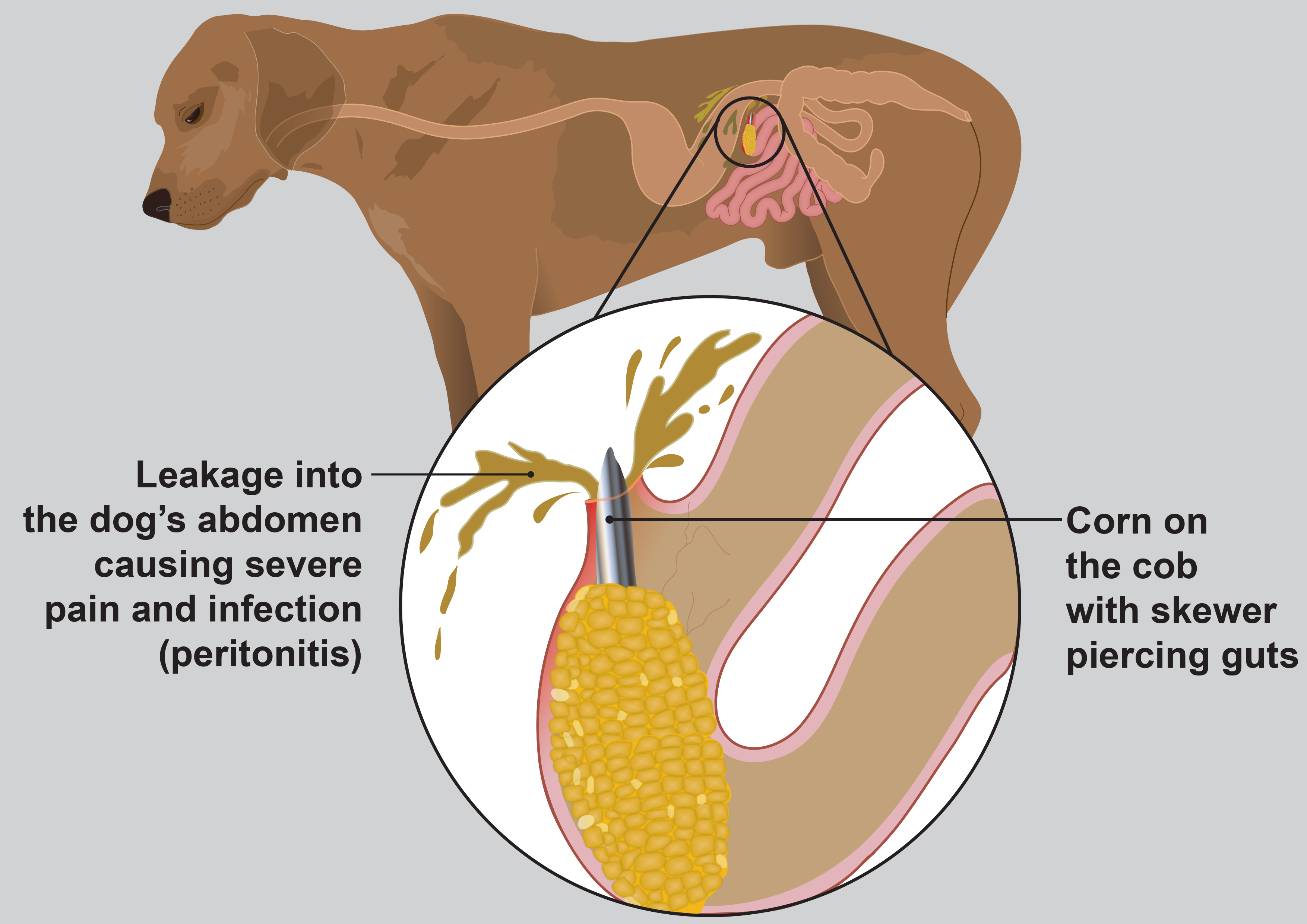
Illustration of gut blockage piercing gut in dog
Gut blockages can lead to serious complications


Why do dogs eat things they shouldn't?

Curiosity

Dogs explore the world with their mouths. Sometimes they can accidentally swallow the things they
pick up out of curiosity.

Boredom

Dogs are very intelligent animals and they can get bored easily. They might fill their time by chewing
on or tearing up things in your house, swallowing something they shouldn’t in the process.

Lack of nutrients

Some dogs have a taste for things that we don’t think of as food, such as poo. This can be a sign that
they’re missing out on important nutrients. Speak to your vet for advice.

Stress

If your dog is stressed out, they might comfort themselves by chewing on something they shouldn’t.

Attention

Did they get a lot of fuss and attention last time they ate something they shouldn’t have? Your dog
might have learnt that eating a toy or chowing down on your slippers makes them the center of attention!


Tuesday, February 26, 2019

National Responsible Pet Owners Month


The month of February is National Responsible Pet Owners Month! Animals have been our companions for thousands of years, whether it be cats, dogs, horses or even cows. Owning a pet is great fun, but also a great responsibility. 


Here are some tips for being the best pet owner you can be:


Make sure your pet is getting a healthy diet and plenty of exercise.


Different types of animals need different types of diets, which means it's your job as a pet owner to make sure the food you're giving your pet is right for them. Obesity in animals is very common but can be detrimental to your pets health!


Bring your pet to the vet for regular checkups.


Bringing your pet in for a checkup at least once a year is essential in making sure your pet is healthy and happy. Your vet will check for any signs of illnesses that you may not be aware of!


Make sure your pet is groomed and has good hygiene.


All pets need regular baths and haircuts, but some breeds might need to be groomed more often than others. Keeping clean ears and teeth should also be a regular routine to keep dental disease away!


Pet-proof your home.


Sometimes, we don't realize the things in our own homes could be potentially dangerous for pets. Some house plants can be poisonous to pets if eaten, so always be cautious of what your pet could get into!


We hope these tips have inspired you to become the most responsible pet owner ever!


Friday, June 29, 2018

Pet First Aid

Pet First Aid

We've shared a lot of posts on our social media about pet first aid and what should be in your pet's first aid kit, but do you know how and when to use those things? We'll start with prevention first and work through some different ailments that can happen to your pet. 

Prevention

Keeping your cat in doors will keep them from getting attacked by neighborhood dogs or other animals. Having your dog well trained and on a leash will prevent them from getting hit by a car. Making sure all your pets are microchipped and collared should they get away from your home can get them back to you safely and have you notified should something happen to them. Make sure you pet proof your home to keep your pets out of household chemicals and keep toxic plants.

Ailments

Toxins/Poisoning: Rodent toxins, cleaning agents, some plants, and antifreeze. There are some people foods that are toxic to pets. This first thing you should do if you find your pet has been exposed to something toxic is read the label. If it says to wash your skin thoroughly with soap and water, then you need to wash your pet thoroughly with soap and water. Same thing if it says to flush the eyes with water for 5 minutes. Then call your vet. If you find your pet has ingested something, call your vet, emergency vet, or you can call the Animal Poison Control Hotline (there is a fee for the consultation) immediately. Make sure you have the package available when you call to use as a reference and let them know the breed, size, sex, age, weight, how long they were exposed to the toxin and what their symptoms are.
Bleeding: There are two types of bleeding, external and internal. External is the kind we can see and usually tend to "freak out" when we see it because we know our pet is hurt. Internal is the kind we can't see, think more along the lines of a ruptured organ. This is usually more dangerous than the bleeding we can see. When your pet has external bleeding, apply some clean gauze pads over it and apply pressure for several minutes, same as you would for yourself. You can even take a gauze wrap and wrap it around the pad to hold it in place. If bleeding is severe, apply the bandage and head to the vet immediately. For internal bleeding you need to look for blood coming from the mouth, nose, rectum, blood in the urine, pale gums, coughing up blood, your pet may collapse, or have a weak pulse. If your pet has any of these symptoms, keep them calm, quiet, and warm and take them to the vet immediately. 
Fractures: These almost go hand in hand with external bleeding. If the fracture is an open fracture, there are now two wounds to take care of: the fracture and the bleeding wound. Don't try to set the fractures yourself. If your don't know what you're doing, you risk putting your pet in more pain and you can cause more harm to your pet. The best thing to do is to use something as a stretcher and wrap your pet in a blanket, cover any bleeding wounds, and transport them to the vet. 
Burns: There are different types of burns you need to know about. The obvious is a burn from something hot or a fire, but there are also chemical burns which can be caused from getting into those toxins. For burns from fire, apply ice water compress over the area to stop the burn. For chemical burns, flush the area with large amounts of water. 
Seizures: Do not try to hold your pet still. Move objects away from your pet so your pet doesn't get injured. After the seizure has stopped, usually a couple of minutes, keep your pet calm and quiet and call your vet. 
Choking and not breathing: Please be careful when dealing with a choking pet. When an animal is choking, it is more likely to bite because it is panicking, and this includes your little Fluffy and Snowball. If your pet is still able to breathe, get them to the vet immediately. If your pet has collapsed, place your hands on both sides of the rib cage (if your pet is small enough) or lay them on their side and strike the rib cage with your palm firmly until the object has come out or you've reached the vet's office. If your pet stops breathing and is not choking, it's best to take a pet CPR class, but you want to close their mouth and breathe into their nose until their chest expands. Keep giving rescue breaths every 4 seconds on the way to the vet. For no heartbeat, we advise you take a pet CPR class. 
Heatstroke: Move your pet to shaded or cool area. Submerge your pet in cool - cold water either by dumping water on your pet or using a hose. You can even take your pet inside to the bathtub. Place a cold wet towel around your pet and transport them to the vet.


Wednesday, June 20, 2018

After Hours Care Options


After Hours Care Options

You love your pets. They're family and you treat them as such. You tell your parents when their grand-dogger tried her first ice cream cone. Your cat isn't your pet, you are your cat's person. He has claimed you and meets you at the door and rubs your face as soon as you sit down. They only get the best from you. The best food, the best treats, the best toys, the best bedding, and the best vet that you spent a month and a half researching before deciding this was THE vet for your furbabies. Now something has happened and your wonderful vet is closed for the weekend. What do you do? If your vet has an emergency number, that's great. You're all set. All you need to do is call the emergency number and do what it tells you to do. But what if your vet doesn't have an emergency number for you to call? Do they have a recommended clinic for emergency situations or after hours? This may have been something you overlooked when you chose your vet and asked him or her all those questions during the first visit. It's okay. It happens. "Oh, my...How did I not think to ask what to do after hours?!" Because, like most pet owners, you don't want to think that accidents or emergencies are going to happen. I mean, we don't even want to think about them happening to ourselves or our human family members, but they do. That's why they're called accidents and emergencies.

Okay, your vet is closed for the weekend or holiday and there is no emergency number. Is there a 24 hour clinic they recommended in your paperwork that you just overlooked? If not, chances are you have Google, Bing, Siri, or something at your fingertips to look for an after hours clinic. With this option, you can see who is closest and sometimes, the price ranges with those little $$ next to the names of the clinic. Just keep in mind that in an emergency, the prices are going to be a little more than what you'd pay going to your regular vet, just as you'd expect to pay more going to the emergency room for yourself than your primary care doctor. Dealing with a pet emergency is not the same as dealing with a human emergency where you can just pick up the phone, dial 911 and an ambulance shows up taking care of everything. You need to know what number to call and where you are going. You are you're pet's ambulance.

What is an Emergency?

You have to ask yourself, is this an emergency or can it wait until Monday when I can call my regular vet? Well, that depends on a few things. If you feel it is an emergency, then it is. If you're not sure, then here's a list for you to go by.
1. Trauma of any kind. This can be from getting hit by car, falling from a few feet, or a dog fight.
2. Seizures. Especially if you're pet has never had a seizure before. 
3. They have extreme bleeding. You can't get the bleeding to stop or slow down. 
4. Having troubles breathing or are choking. 
5. Pale gums or a weak or rapid pulse. 
6. They have become unresponsive, disoriented, or paralyzed. 
7. Vomiting or diarrhea for 24 hours. 
8. They have bright red blood or tarry looking stools or vomit.
9. Extremely high or low temperature.
10. Inability to urinate or defecate.
11. They are in extreme pain. 

What to do in an Emergency

First things first, remain calm. You won't do your pet, or yourself, any good if you can't keep yourself calm. You're going to have to answer a lot of questions when you get there, like what happened and when did it happen? Did your pet ingest something? What time did the seizure occur? When did you notice your pet having problems urinating? When is the last time your pet ate or drank anything? How much did they eat/drink? Is that normal for them? What did you try at home to fix the problem before bringing them into the clinic? Is your pet on any medications? Does your pet have any kind of illnesses, like Cushing's disease, diabetes, kidney disease, or something else they should know? Be patient. It's going to take awhile to assess your pet. The team will also do x-rays and lab work as well as anything else they need to do to help your pet. This can all take awhile. Make sure you follow up with your primary vet. Have the emergency clinic send the records to your regular vet if they don't give them to you, and call the following business day to schedule a follow up appointment. Your regular vet needs to know what happened to your pet so they can help with the follow up care and keep your pet healthy. 

Friday, June 15, 2018

Dangers in Your Backyard

Dangers in Your Backyard

By now we all know the dangers the heat can pose on our pets, but there are other dangers in your own backyard you need to be aware of. When someone mentions dangers in your yard, your mind may wander to other dogs, snakes and bees or wasps (have you ever seen what a wasp or bee sting can do to your dog's face?), but there are other dangers you should be aware of. When we talk about the dangers lurking in your yard, please be aware that we're talking about human dangers, animal dangers, toxins and other types of dangers. You need to be aware of these and how prevent or fix them since your pet looks at you to keep them safe just as much as they would do anything to protect you. 

Human Dangers

There are more people in and out of your backyard than you probably realize. Utility companies have to have access to different meters and boxes in your yard. Gas, water, electric, cable, and phone are the most common and they can come into your yard for various reasons. Power lines down in your yard? Electric company needs in there. Neighbor get new cable? Cable guy may need to put that cable across your yard which means he's going to have to come back and bury it later. Then you have the people that come in your yard regularly. The kid that mows your grass every Wednesday, the poolboy, or the gardener. These people are dangers simply because they are in your yard and can leave a gate open. These people are also dangers because your pets don't actually know them; they just know they're there every week. Dognappers are another very real danger. Dognappers are usually looking for purebreds they can sell, dogs they use for breeding, or dogs they can use for fighting or as bait dogs. Lastly, there's the "someone else's" that pose a danger. The "someone else's" are the people in the neighborhood, family, and friends. Neighbors are a danger because they can show up in your yard unexpectedly, like the kids hit a ball into your yard and they've now come to get it. 

Animal Dangers

Dogs are always the first thing to pop into people's minds when they think of other animals getting into their yard. And let's not forget snakes. There's been numerous dogs bitten by snakes either out of curiosity or protecting their humans. But let's think on a much larger scale here. Coyotes are all over the country no matter where you live and they've been known to attack smaller dogs and cats. Then you have the coyotes that have actually started to breed with wolves in certain parts of the country, making them more aggressive, bigger, and attacking more than just those smaller dogs and cats. While we're talking about certain areas of the US, you've got bears and large cats like mountain lions or cougars and jaguars. Deer, opossum, and raccoons can even been dangerous if your curious pet decides to go nosing around and mess with them. A panicked deer that starts kicking and headbutting your dog or rabid raccoon or opossum bite can be horrific for your pet. 

Other Dangers

These are those toxins and the dangers your dog creates for himself. Maybe you have a digger or a jumper. Or a chewer or an acrobat! We've all seen the videos on Facebook and YouTube of the dogs using the swingsets and trashcans to take a running jump onto and then almost fly to the fence and use the fence to propel themselves right over it. Then you have those dogs who can jump just like a deer or gazelle and clear a six foot fence without even thinking about it. Lastly, there's those pups who know that no matter what they try, they are not getting over that fence so they just go right under or threw it. They either dig their way under or just eat the fence until there's a hole big enough to go through. Toxins are another big issue for pets. Dogs like to chew on almost any and everything. Keep all chemicals, yard fertilizers, and bug sprays put away in the garage. Plants can also be toxic to pets. There's a long list of toxic plants to dogs and cats and it's best to just not have them in your yard. 

How to Prevent Dangers

Ways to deter these dangers are to keep an eye on your pets any time they're in your yard. Don't leave them alone in the yard. Walk your fence line and fix any broken areas to your fence to keep unwanted guests out and your pet in. Make sure you don't leave your pet's bowls outside. If you have a grill, clean it after using it and make sure all trashcans are sealed tightly. If you have a garden, pick your fruit and veggies as soon as they are ripe and keep a fence around them. Don't put anything sweet smelling or meat in your compost. Barbed wire or an electric wire run across the top of your fence and chicken wire run up to two feet under ground will help keep animals from going over and under your fence. Another great option is coyote rollers on the top of your fence, for those dogs who like to climb and jump out. You can also post "Beware of Dog"signs to keep people from coming into your yard. This will make them think twice about going int your yard without coming to your door first. 

Wednesday, June 6, 2018

Dogs in Pools

Dogs in the Pool

If you have a dog and a pool, chances are you've already had him in the pool. If not, maybe you've considered it. There's nothing wrong with letting your pooch in your pool, but there are some things you need to know to keep him safe in and around the pool.

Pool Safety for Dogs

Make sure your dog knows how to swim. Seems like a no brainer, right? Well, there are dogs that don't actually know how to swim, so you may need to teach him. Make sure your pooch knows where the exit is. It may seem funny watching him swim in circles trying to find the way out, but he's going to get exhausted and exhausted dogs can drown. Make sure you're showing him where the steps are and keep leading him back to them from various points in the pool so he gets familiar with where they are no matter where he is. This will also help him avoid panicking in case he accidentally falls in the pool. Make sure your dog is comfortable. If he takes off and seems good to go on the first introduction to the pool, then you're all set. If he seems like he isn't sure of himself and the pool, try again another time. You may have to try a few times to get your pooch over his fear of the pool. Always supervise your dog when he's in or around the pool. Accidents happen and it's better to have a watchful eye in case of an emergency situation. 

Monday, May 28, 2018

Too Hot to Walk!

How Hot is Too Hot?

Fido wants to go out for a walk. He has his leash in his mouth and brought it to you. Now he's impatiently waiting by the door. "Let's go, mom", he barks. He doesn't understand that it's 95 degrees out there and you're concerned about his little feet. And at this point, he doesn't care. So how hot is too hot for you to take him on his walk? If you're able to go outside and place the BACK of your hand, not the palm, on the pavement and keep it there for 5 seconds, then it's okay to take him on his walk. Now, if you go out and place your hand on the pavement and the back of your hand starts to burn after 3 seconds and you can't keep your hand there, Fido is going to have to wait for that walk unless there is a nice grassy area for you to take him. If your pet is high-stepping, it's too hot for them, even if you did the 5 second back of the hand test. 

Tips for Walking Your Dog in Hot Weather

Take your pet for walks in the morning or in the evening when the pavement is cooler. Not only will this help prevent burns on their paws, it will make them less susceptible to overheating as the day gets warmer. Take a collapsible water bowl with you on your walk. If you notice your dog getting too hot, take a break and give him a drink. You'll already have the bowl with you. Take your dog on walks in the grass. No asphalt to walk on means no burns. Live in the city or don't have any grass for your dog to walk in? Check your local pet store for dog boots. There are many styles and sizes available in several price ranges to keep your pooch protected. If your dog can't do the boots, look for protective salve. If you suspect your pet has burns on their paws, take them to the vet. 

Friday, May 25, 2018

Summer Safety Tips

Summer Safety Tips

It's starting to get hot out. Okay, okay, it is hot out. It's only going to get hotter as we head into summer. We all know that as it warms up, our pets need to have fresh water at all times and a shady area to go to so they can cool off. But there are so many other things to take into consideration for your fur-babies when the weather starts to heat up. For instance, if your pets don't have that fresh water and shade, they can actually have a heat stroke. Which leads me to the next thing. Pets in cars. It happens every year. Animals, and kids, die in locked cars every year. "But I left the windows cracked!" Yeah...have you sat in a car with the windows cracked for 10 minutes? In the sun? When it's "just" 80 degrees out? You start to get miserable after just 10 minutes! Imagine how you'd feel after 30! So, with these things in mind, we're gonna move on to this list of do's and don'ts for your furbaby in this heat.

1. Access to fresh water everywhere. One bowl on the porch isn't gonna cut it. Put it in the shade and then add a couple more around the yard. 
2. No pets left in hot cars. Period.
3. Make sure your playful pet doesn't overexert themselves. This means you may have to limit their exercise if you have a super playful pup.
4. Walk your pets in the morning or later in the evening. If that asphalt is too hot for the back of your hand, it's too hot for their little feet!
5. Protect your pet from sunburn. Yes, you read that right, sunburn. If your furbaby is a hairless breed or has lighter hair, it's easier for them to burn. Take precautions to protect their skin. And don't shave your pet.
6. All pets are susceptible to heat stroke, but those with flat faces are more susceptible since they can't pant as effectively. 
7. Keep your pets away from fireworks. Most pets don't like the noise anyway, but fireworks are toxic to your pets.
8. Pets and BBQ grills and food don't mix. Grills can get knocked over and most of the foods and drinks found at BBQ's are toxic to pets. 
9. Keep all lawn, garden, insecticides and rodent killers away from pets. 

Know the Signs and Symptoms of Overheating and Heat Stroke

Excessive panting and trouble breathing, excessive drooling, discolored gums, mild weakness and mobility problems, confusion, vomiting, diarrhea, and high temperatures. If your pet is showing any of these symptoms, please get them to a vet immediately. 

Tuesday, May 8, 2018

National Animal Disaster Preparedness Day

National Animal Disaster Preparedness Day

When disaster strikes almost everyone has a plan.  You grab the kids and get to safety.  Do you have a plan for your pets? 

Planning

Think of all the common disasters that happen in your area.  Fires, hurricanes, tornados, earthquakes, or blizzards are all examples that you need to be prepared for.  

In the case of a wildfire or hurricane do you have a carrier big enough for your pet? Do you have room in your vehicle for your children, necessities, and your pets in the event you must evacuate? Don't forget your pets will need fresh water too just like your family. If you have a house fire, will your pet leave the house when you call and remain beside you or do you have a leash hanging right by the door just in case? 

What will you need to do to get your pet to shelter with your family?  Will they follow and be easy or will you need to carry your pet because they are scared of thunder?  Do you have emergency supplies for both your family and pets? 

What will you do if you're stranded in a blizzard and you lose power?  Make sure you have blankets, food, and water for the entire family including your fur baby.  

What are your emergency plans? 

Hot for the summer

To avoid these problems and enjoy the  summer season  with your  pet , here're the tips to keep in mind. Provide plenty of water and...